
Forced Displacement: What does it really mean?
When a disaster strikes or a conflict erupts, people don't leave home because they want to. They leave because staying is no longer safe.
People who have to flee their homes because of conflict, violence, persecution or disasters are known as forcibly displaced people.
Forced displacement can take many forms. It can mean crossing a border in search of protection, fleeing to a temporary camp within one's own country, waiting years for an asylum claim to be processed, or being born into displacement without citizenship. Each situation carries a different legal meaning, but are all shaped by the same search for safety and dignity.
According to the United Nations Refugee Agency, as of the end of June 2025, 117.3 million people had been forced to flee their homes around the world. Behind that number is 117 million individual stories, lives, and reasons to act.
These 117.3 million stories show that displacement is not experienced in one single way. It is a multidimensional experience that is not just shaped by conflict, disasters, persecution and climate change but also resilience, community and survival. This blog post explores the different terms used to describe forced displacement, including refugee, asylum-seeker, internally displaced person (IDP), and stateless person. Through stories and statistics, we'll explore their differences and what they have in common: that every person forced to flee deserves dignity and support.
Refugees: Beyond the Misconceptions
Despite how often the word "refugee" is used in public discourse, refugees make up less than a third of the world's forcibly displaced population.
As World Refugee Day approaches on June 20th, it's important to not only recognize refugees, but also understand the many different experiences of displacement that exist behind statistics.
Refugees are individuals who have been forced to flee their home and seek safety in another country. It is worth noting that "refugee" is a legal status that needs to be formally evaluated. Not everyone who flees to another country will be recognized as a refugee.
Here's how the 1951 Refugee Convention defines a refugee:
“owing to well-founded fear of being persecuted for reasons of race, religion, nationality, membership of a particular social group or political opinion, is outside the country of [their] nationality and is unable or, owing to such fear, is unwilling to avail [themself] of the protection of that country."
For many families, becoming a refugee is a sudden and unexpected outcome. Homes are abandoned in hours and daily routines disappear overnight. While this description may seem like stories of continuous loss, refugee stories are more than that.
Fatouma's story shows how displacement can stretch across years and affect generations. After fleeing Syria for Lebanon with her family in 2011, she spent more than a decade living in a tent and supporting her children through low-paid work. Fatouma's daughter Lana found joy in a child-friendly learning space supported by Canadian Foodgrains Bank. Even after renewed hostilities destroyed their tent and forced them to flee again, Lana held onto her dream of studying. "She loves to learn. This is home to her," Fatouma said.
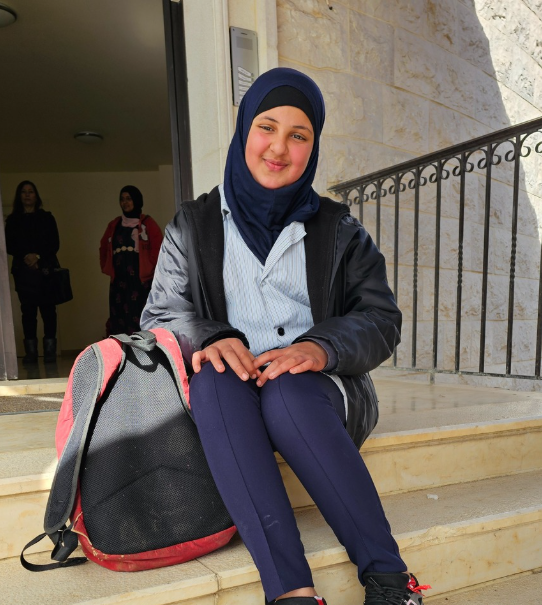
For some refugees, there is hope of returning. The UNHCR reports that large numbers of refugees return home each year when conditions in their home country improve. For others, resettlement can provide a safe and lasting solution, offering protection for refugees with acute needs and reducing the risks of dangerous journeys. The UNHCR estimates that around 2.5 million refugees worldwide need to be resettled in 2026.
Internally Displaced People: The Largest Displaced Population
Although refugees are often the focus of international discussion, internally displaced people (IDPs) account for approximately 70 percent of the world's forcibly displaced population.
IDPs are forced to flee for many of the same reasons as refugees, but they remain within their own countries. This distinction matters because crossing an international border determines the legal protections and international support available to them. Since IDPs remain inside their own country, they often rely on national systems that may already be overwhelmed, and they may receive less international attention and protection than refugees.
Today, internal displacement remains at near record levels globally.
According to the Internal Displacement Monitoring Centre's 2026 Global Report on Internal Displacement, 82.2 million people worldwide were living in internal displacement. That is roughly twice the population of Canada. About 83 percent were displaced by conflict and violence, while around 17 percent were displaced by disasters.
Behind these figures are families that are making impossible decisions in a moment of crisis. They decide whether to stay or flee, where to shelter and how to protect the ones closest to them while facing uncertainty.
In Chad, Negeum Alice and her five children became part of this reality when floods destroyed their home, farmland and livelihood after heavy rains affected all 23 provinces in the country. As her family's primary breadwinner, Negeum had supported her children through farming. "With all the difficulties I was going through, the flood came and destroyed everything I had cultivated and even the place where I lived with my children," she recalled.
Negeum Alice received support at the Sokolo disaster relief site. She states that "Not knowing where to go and what to do, I came to settle on the site." After relocating, her family received essential items such as soap, mosquito nets, blankets and clean water containers thanks to the support of Oxfam-Québec.
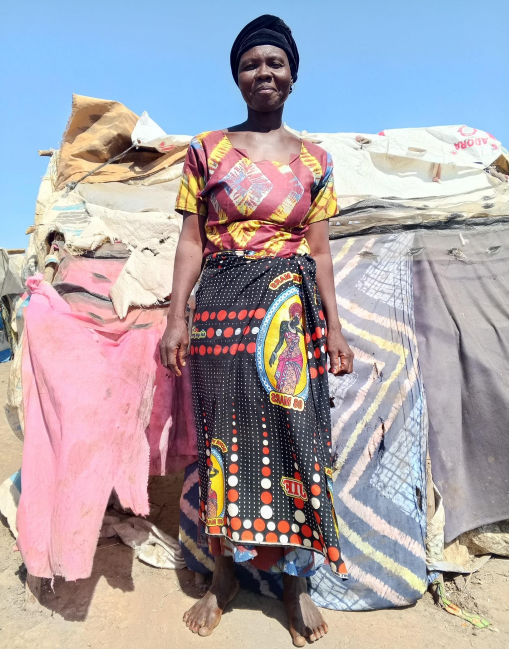
For many people, internal displacement lasts for years or even decades. It becomes a reality that is shaped by repeated movement, damaged livelihoods, interrupted education and the challenge of rebuilding.
Despite the staggering number of IDPs worldwide, internally displaced people are often less visible in global discussion about forced displacement because they have not crossed an international border.
Asylum Seekers: Facing Uncertainty
Before someone can be formally recognized as a refugee, they must apply for asylum. An asylum seeker is someone seeking international protection whose refugee claim has not been decided.
Some asylum seekers wait months or even years for the decision that will determine whether they can remain safely in another country or have to return to the country from which they fled.
At the end of June 2025, there were 8.4 million asylum seekers globally.
The uncertainty is visible across displacement journeys. In Guatemala, where Plan International Canada is supporting medical and psychosocial care, protection, shelter and financial support to migrants who were turned away from other countries, the organization's CEO Lindsay Glassco described children and families who had left "days or perhaps even months or years earlier" to flee violence and poverty, only to return after an asylum process that could drag on for months.
It is important to remember that every refugee was once an asylum seeker and behind every legal category is an individual that is trying to protect their family and rebuild stability.
Stateless People: Life Without Citizenship
Globally, millions of people have a distinct legal condition: they are stateless. This means that a person is not recognized as a citizen by any country. Being stateless can make people especially vulnerable when conflict, persecution, or disaster forces them to move because they may lack the documents and state protection needed to cross borders safely.
Statelessness can influence nearly every aspect of daily life, including access to education, healthcare, employment and freedom of movement. For those who are forced to flee their homes and country, these factors can make displacement even more precarious. Some stateless people may become refugees, but many have also never crossed an international border. They remain largely invisible in global conversation about displacement even when living without the rights that citizenship provides.
The experience of the Rohingya people shows how statelessness can make displacement even more precarious. The Rohingya people are a stateless Indo-Aryan group who have experienced decades of persecution and violence. Hundreds of thousands of Rohingya children across Asia face severe restrictions on their rights, including limited access to education, healthcare and freedom of movement, particularly for those who remain stateless or displaced. Golam Mostofa, Cox's Bazar Area Director for Save the Children, states that "Children and their families face rising insecurity and inadequate aid. Add to that severe restrictions on movement, limited livelihood opportunities, inadequate resources and mental health crises and what you have is a recipe for disaster with children once again bearing the brunt." Save the Children is providing child protection, access to learning, health and nutrition, water, sanitation and hygiene services, and distribution of shelter and food items in Cox's Bazar.
More than Numbers
Behind every statistic about displacement, there are parents deciding what to carry before leaving their house, children facing inconsistencies in their schooling, and communities looking to each other for support. Behind every label is a person who is trying to find safety while preserving dignity and hope.
This World Refugee Day, recognizing forcibly displaced people means recognizing the full complexity of displacement. This recognition goes beyond refugees crossing borders, but also internally displaced people, asylum seekers and stateless people whose experiences are often overlooked.
Together, we can support forcibly displaced people who are in urgent need. The Humanitarian Coalition's members provide life-saving aid like shelter, clean water, sanitation services, protection services, healthcare and livelihood support.
Your support can help people who are forcibly displaced meet their most urgent needs. Click here to donate today.